In international trade and global logistics, unclear cost allocation is one of the most common causes of disputes. Under FCA (Free Carrier) terms, one frequently asked question is:
Who is responsible for port charges under FCA—seller or buyer?
Based on the rules published by the International Chamber of Commerce in Incoterms 2020, this guide explains the cost structure of FCA in a practical and easy-to-understand way—so you can avoid costly misunderstandings.
1. What is FCA? Understanding the Core Rule
FCA (Free Carrier) is a widely used Incoterm suitable for all modes of transport, including sea, air, rail, and road.
Its core definition:
The seller delivers the goods to a carrier or another party nominated by the buyer at a named place.
This leads to two critical principles:
- 📍 Risk transfers when goods are handed over to the carrier
- 📍 Cost responsibility is determined by the named place of delivery
👉 In simple terms:
It’s not the term “FCA” that decides costs—it’s the location.
2. What Are Port Charges?
Before assigning responsibility, it’s important to define what “port charges” include.
Typical port/local charges may include:
- Terminal Handling Charges (THC)
- Port handling and loading fees
- Documentation fees
- Security fees
- Equipment handling charges
- Gate-in / yard handling fees
👉 These costs usually arise when cargo enters a port terminal or a freight forwarder’s warehouse.
3. The Key Logic: Who Pays Under FCA?
A common misconception is:
“Under FCA, the seller always pays port charges.”
⚠️ This is not entirely correct.
✔ The correct principle is:
The party responsible for delivering goods to the named place bears all costs up to that point—including whether port charges occur.
4. Two Typical FCA Scenarios (Critical for Understanding)
Scenario 1: FCA at Seller’s Premises (Factory/Warehouse)
📍 Example: FCA Shanghai Factory
Seller’s Responsibilities:
- Goods production and packaging
- Loading at seller’s premises (if applicable)
- Export customs clearance
Buyer’s Responsibilities:
- Inland transport to port
- Port charges (THC, terminal fees, etc.)
- Main freight (ocean/air)
- Destination charges
👉 Conclusion: Port charges are paid by the buyer
Why?
Because:
- Delivery occurs at the factory
- Port operations happen after delivery
Scenario 2: FCA at Port or Forwarder’s Warehouse
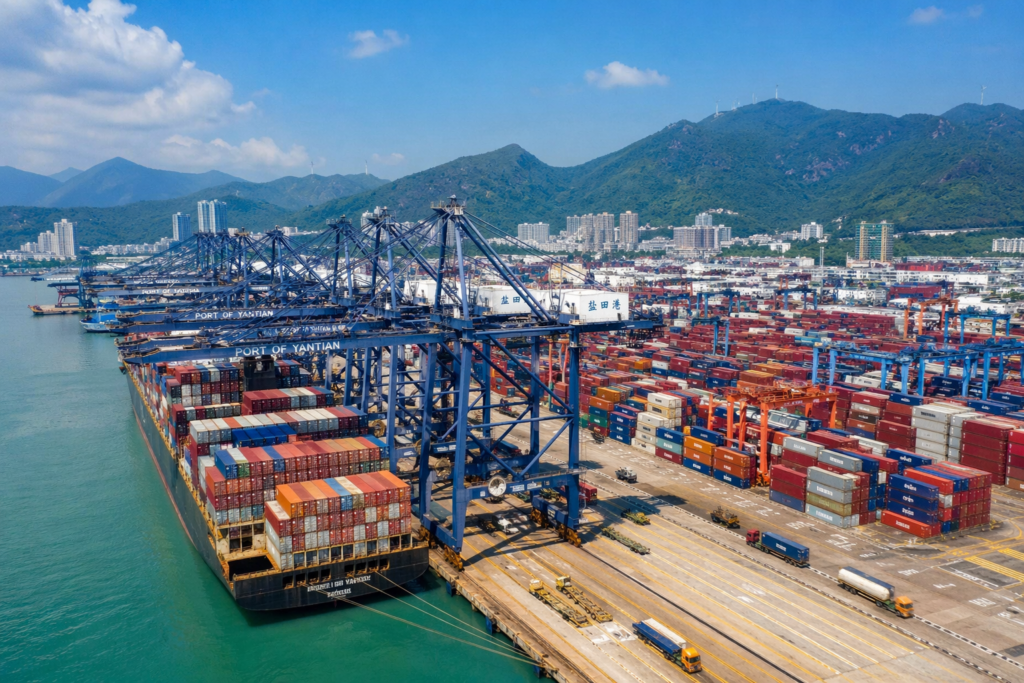
📍 Example: FCA Yantian CY or FCA Forwarder Warehouse
Seller’s Responsibilities:
- Trucking to port or warehouse
- Export customs clearance
- Warehouse receiving / gate-in charges
- Port charges (THC, handling fees, etc.)
Buyer’s Responsibilities:
- Main freight (ocean/air)
- Destination clearance and delivery
👉 Conclusion: Port charges are paid by the seller ✔
Why?
Because:
- The port/warehouse is the delivery point
- The seller must cover all costs before delivery is completed
5. FCA vs FOB: Key Differences
Many exporters confuse FCA with FOB, which can lead to incorrect cost assumptions.
| Item | FCA | FOB |
|---|---|---|
| Transport mode | All modes | Sea only |
| Delivery location | Flexible | Port only |
| Risk transfer | At handover to carrier | After loading on vessel |
| Port charges | Depends on location | Usually seller |
👉 Key takeaway: FCA is more flexible—but requires clearer agreements
6. Common Mistakes in Practice
Mistake 1: Not Specifying the Delivery Location
Many contracts simply state:
FCA China
⚠️ This is incomplete.
👉 Correct examples:
- FCA Shenzhen Warehouse
- FCA Ningbo Port
Without a clear location:
- Cost allocation becomes unclear
- Disputes are likely
Mistake 2: Ignoring Export Customs Responsibility
Under FCA rules:
👉 The seller must handle export customs clearance
This is a major difference from EXW (Ex Works).
Mistake 3: Misunderstanding Port Charges
Port charges are not fixed—they depend on:
📍 Where the delivery takes place
For example:
- Factory delivery → No port charges
- Port delivery → Port charges apply
7. Practical Tips for Logistics Operations
To avoid disputes and ensure smooth shipments:
✅ 1. Always Define the Exact Place of Delivery
Examples:
- FCA Guangzhou Warehouse
- FCA Qingdao Port CY
✅ 2. Clearly List Included Charges
In your quotation or contract, specify:
- Whether THC is included
- Whether documentation fees are included
- Whether trucking is included
✅ 3. Confirm Cost Structure with Forwarders
Port charges vary by:
- Port (e.g., Shenzhen vs Shanghai)
- Carrier and terminal
8. One-Sentence Summary
Under FCA Incoterms, port charges are not automatically borne by the seller—they depend entirely on the named place of delivery:
- 📍 Factory delivery → Buyer pays port charges
- 📍 Port/warehouse delivery → Seller pays port charges
9. Final Thoughts
FCA is one of the most flexible and widely used Incoterms in global trade. However, this flexibility also makes it more prone to misunderstandings—especially when it comes to cost allocation.
The key to mastering FCA is simple:
Costs and risks always transfer at the named place of delivery.
Once this principle is clear, most disputes can be avoided.
If you are managing international shipments under FCA terms or looking to optimize your logistics cost structure, working with an experienced freight forwarder can help ensure full transparency, compliance, and efficiency throughout the shipping process.