When shipping goods from China or other countries to Africa, exporters may encounter a requirement called CTN.
For people who are new to African trade, the term can be confusing. Some may think CTN refers to the number of cartons in a shipment, while others may mistake it for the container number shown on the Bill of Lading.
In fact, CTN is neither a carton quantity nor a container number.
In the context of international shipping, CTN generally refers to a Cargo Tracking Note, a regulatory document or reference number used by certain African countries to collect and monitor cargo information before the goods arrive.
Depending on the country, similar systems may be called ECTN, BESC, BSC, ICTN, or other country-specific names.
Understanding the difference is important because an incorrect or missing CTN may result in documentation problems, cargo clearance delays, additional charges, or other compliance issues.
What Does CTN Stand For?
CTN stands for Cargo Tracking Note.
It is a cargo-tracking and regulatory mechanism used by certain countries to obtain detailed information about international shipments before cargo arrives at the destination.
A CTN record may contain information such as:
- Shipper details
- Consignee details
- Notify party
- Cargo description
- HS Code
- Quantity
- Gross weight
- Net weight
- Cargo value
- Commercial invoice information
- Port of loading
- Port of discharge
- Vessel and voyage information
- Bill of Lading details
- Container information
The exact information required depends on the regulations of the destination country.
For example, Nigeria uses the International Cargo Tracking Note (ICTN) framework. The Nigerian Shippers’ Council identifies ICTN implementation among its responsibilities relating to Nigeria’s maritime and port environment.
Therefore, CTN should be understood as a destination-country regulatory requirement, rather than a standard document required for every international shipment.
CTN Is Not a Container Number
One of the most common mistakes in international shipping is confusing CTN with the container number.
They are completely different.
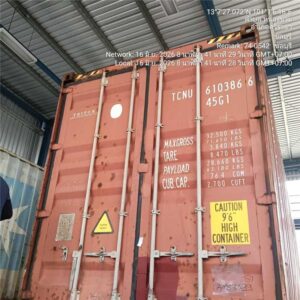
A container number identifies a specific physical shipping container.
For example:
Container No.: MSCU1234567
This number belongs to the container itself and is used by shipping lines, terminals, freight forwarders and other parties to track the physical equipment.
A CTN number, on the other hand, is connected to the cargo tracking and regulatory documentation process.
The difference is simple:
Container Number = identifies the physical container
CTN Number = identifies the cargo tracking/compliance record
The container number may be included as part of the information submitted for a CTN application, but the two numbers are not interchangeable.
Is CTN the Same as the Number of Cartons?
No.
This is another frequent misunderstanding.
In shipping documents, you may see an abbreviation such as:
CTNS
CTNS commonly means Cartons.
For example:
500 CTNS
means:
500 cartons
However:
CTN No.
in an African shipping compliance context generally refers to:
Cargo Tracking Note Number
These are completely different concepts.
Example of a shipment
Imagine a shipment with the following details:
- 1 × 40HQ container
- 500 cartons
- 8,000 KG
- 25 CBM
The shipment may have:
Package Quantity: 500 Cartons
Container: 1 × 40HQ
Container Number: MSCU1234567
Bill of Lading Number: ABC123456789
CTN Number: A country-specific cargo tracking reference
Therefore, the number of cartons does not equal the CTN number.
Why Was the CTN System Introduced?
Cargo tracking systems are designed to give destination authorities access to important shipment information before the cargo reaches the port.
International cargo involves multiple parties, including:
- Exporters
- Importers
- Shipping lines
- Freight forwarders
- Customs authorities
- Port authorities
- Government agencies
Without advance information, authorities may have limited visibility into incoming cargo.
A CTN system can help authorities with several areas of cargo management.
1. Advance Cargo Information
Authorities can receive shipment information before the vessel arrives.
2. Customs and Trade Control
The information can support customs procedures and cargo declarations.
3. Port Management
Advance shipment data can assist with cargo processing and port operations.
4. Cargo Security
Cargo information can be used as part of risk-management and security procedures.
5. Trade Monitoring
Government agencies can use shipment data for trade statistics and regulatory management.
The exact purpose and implementation, however, varies between countries.
Is CTN Required for Every African Shipment?
No.
This is an important point for exporters and freight forwarders.
There is no single CTN requirement covering the entire African continent.
Different countries have introduced different cargo-tracking or advance cargo declaration systems.
Depending on the destination, exporters may encounter terms such as:
- CTN
- ECTN
- ICTN
- BESC
- BSC
- Cargo Tracking Note
- Electronic Cargo Tracking Note
The name, application process, responsible authority and documentation requirements can vary.
Therefore, exporters should always determine the requirement according to the specific destination country and port.
A CTN requirement for Nigeria should not automatically be assumed to apply to another African country.
CTN and Nigeria Shipments
Nigeria is an important example of why exporters need to pay attention to cargo tracking requirements.
For shipments involving Nigeria, exporters may encounter the term:
ICTN – International Cargo Tracking Note
The Nigerian Shippers’ Council identifies the implementation of ICTN as part of its regulatory responsibilities in the Nigerian shipping sector.
For this reason, companies shipping cargo to Nigeria should confirm the latest ICTN requirements before the shipment is dispatched.
Important information may include:
- Exporter details
- Importer details
- Commercial invoice
- Packing list
- Cargo description
- HS Code
- Cargo value
- Weight
- Port of loading
- Port of discharge
- Vessel information
- Bill of Lading information
- Container information
The exact requirements and application procedures should be verified according to the latest applicable Nigerian regulations.
Where Can You Check Nigeria CTN Information?
For companies looking for information about Nigeria CTN procedures, the following resource provides Nigeria-specific CTN information:
Nigeria CTN Information – CTNNO
For official Nigerian maritime regulatory information, exporters can also refer to:
It is recommended that exporters use the latest information from the relevant authority, authorized CTN service provider, shipping line and local consignee before arranging the shipment.
What Information Is Usually Required for a CTN Application?
The exact requirements vary by country, but a CTN application may require several categories of shipment information.
1. Shipper Information
The application may require:
- Company name
- Company address
- Country
- Contact information
2. Consignee Information
Typical information includes:
- Importer name
- Address
- Contact details
- Destination country
3. Cargo Information
This can include:
- Product description
- HS Code
- Quantity
- Package type
- Gross weight
- Net weight
- Volume
4. Commercial Information
Documents may include:
- Commercial Invoice
- Freight value
- Cargo value
- Insurance value, where applicable
- Incoterms
5. Shipping Information
Information may include:
- Port of loading
- Port of discharge
- Vessel name
- Voyage number
- Bill of Lading number
- Estimated departure date
- Estimated arrival date
6. Container Information
Where applicable, the application may also require:
- Container number
- Container type
- Seal number
- Number of containers
This explains why the container number may appear in a CTN application, while still being completely different from the CTN number itself.
When Should You Apply for CTN?
The safest approach is to check CTN requirements before the cargo is shipped.
Do not wait until the vessel has already arrived at the destination port.
The process may involve:
Step 1 — Check the destination requirements
Determine whether CTN, ECTN, ICTN or another cargo tracking document is required.
Step 2 — Prepare the documents
Collect the invoice, packing list, Bill of Lading information and other required documents.
Step 3 — Submit the application
Submit the shipment information through the applicable authority or authorized service provider.
Step 4 — Verification
The submitted information may be reviewed against the commercial and shipping documents.
Step 5 — CTN issuance
Once approved, the shipment receives its CTN reference number.
Step 6 — Provide the CTN to the shipping line or forwarder
Where required, the number should be provided before the relevant documentation deadline.
Step 7 — Ensure document consistency
Make sure the CTN information corresponds with the final shipping documents.
What Happens If CTN Information Is Incorrect?
A CTN is part of the shipment compliance process, so inaccurate information can create unnecessary problems.
For example, discrepancies may occur between the CTN application and the final Bill of Lading regarding:
- Cargo description
- HS Code
- Quantity
- Weight
- Invoice value
- Container number
- Port of loading
- Port of discharge
- Vessel information
Depending on the country and circumstances, corrections or amendments may be necessary.
This can potentially result in:
- Additional processing time
- Documentation amendments
- Extra administrative costs
- Clearance delays
- Cargo release problems
For this reason, the information submitted during the CTN application should be checked carefully.
Can CTN Be Added After the Vessel Has Sailed?
This depends on the regulations of the destination country and the applicable CTN system.
However, exporters should not assume that CTN can simply be added after departure.
Some countries or shipping lines may have specific deadlines for CTN submission or validation.
If CTN is mandatory for a particular shipment, it is much safer to confirm the requirement and complete the process before shipment or before the carrier’s documentation deadline.
CTN vs. B/L vs. Container Number vs. Cartons
The following comparison makes the differences easier to understand:
| Term | Meaning | Main Purpose |
|---|---|---|
| CTN | Cargo Tracking Note | Regulatory cargo tracking |
| ICTN | International Cargo Tracking Note | Country-specific international cargo tracking |
| B/L | Bill of Lading | Transport and shipping document |
| Container No. | Physical container identification | Identifies the shipping container |
| CTNS | Cartons | Package quantity |
A simple way to remember:
B/L → Shipping document
Container No. → Physical container
CTNS → Number of cartons
CTN → Cargo tracking/compliance reference
This distinction is especially important when communicating with overseas customers, shipping lines and African importers.
Common Questions About CTN
1. Does every international shipment need CTN?
No. CTN is a destination-specific regulatory requirement and is not required for all international shipments.
2. Is CTN the same as a container number?
No. The container number identifies the physical container. CTN refers to a cargo-tracking/compliance record.
3. Does CTNS mean CTN?
Not necessarily.
CTNS is commonly used as an abbreviation for cartons, while CTN in a regulatory shipping context means Cargo Tracking Note.
Always consider the context.
4. Does CTN apply to all African countries?
No. Requirements differ by country and may change over time.
5. Who is responsible for obtaining CTN?
Depending on the country, the exporter, importer, freight forwarder or authorized local agent may handle the application.
6. Does the CTN number need to appear on the Bill of Lading?
Where required by the destination country’s regulations or carrier procedures, the CTN reference may need to be provided or shown in the relevant shipping documentation.
7. Should CTN be arranged before shipment?
In general, exporters should check the requirement and arrange the necessary documentation as early as possible, preferably before the cargo is shipped.
Final Takeaway
CTN is a term that can easily cause confusion in international logistics.
It is not the number of cartons, and it is not the container number.
In the context of African shipping, CTN generally means Cargo Tracking Note, a regulatory cargo-tracking reference used by certain countries to collect advance information about international shipments.
For example:
500 CTNS
= 500 cartons
1 × 40HQ
= One 40-foot high-cube container
MSCU1234567
= Container identification number
CTN No.
= Cargo Tracking Note reference
These are four completely different pieces of information.
For exporters shipping to Africa, the most important step is to check the specific destination country’s current requirements before booking and shipping the cargo.
For Nigeria, exporters should pay particular attention to the ICTN requirement and verify the latest procedures through the relevant Nigerian authorities and authorized service providers.
Proper preparation of CTN documentation can help reduce the risk of shipment delays, document discrepancies, additional costs and customs clearance problems.