What Importers and Exporters Should Expect in September 2026
The global ocean freight market is entering September 2026 with mixed signals.
After a strong peak-season period during June and July, some major trade lanes are beginning to show signs of stabilization. However, freight rates are not moving in the same direction everywhere. Trans-Pacific services remain under pressure from strong demand, while Asia–Europe rates have started to ease from their summer highs.
For importers and exporters, September is therefore likely to be a month of market adjustment rather than a broad-based freight rate decline.
Capacity management, port congestion, fuel costs, geopolitical developments, and changing peak-season demand will continue to influence ocean freight rates.
At Freights Logistics, we recommend that shippers focus not only on the lowest freight rate, but also on vessel space, schedule reliability, transit time, and total landed cost.
September 2026 Ocean Freight Market at a Glance
The key trends to watch in September include:
- Trans-Pacific freight rates remain relatively strong
- Asia–Europe rates are beginning to moderate
- Peak-season demand is becoming more uneven by trade lane
- Carrier capacity management remains important
- Port congestion can create short-term schedule disruptions
- Fuel and security-related costs may place upward pressure on freight rates
- Equipment availability remains uneven in some locations
- September may provide better pricing opportunities on selected routes
The market is becoming increasingly dependent on individual trade lanes rather than following one global trend.
1. Asia–North America Freight Rates Remain Firm
The Trans-Pacific market is expected to remain one of the strongest areas of the global container shipping market in September.
Recent market data shows that Asia–U.S. West Coast and East Coast rates have remained elevated, supported by continued demand and limited effective capacity. Freightos reported that Asia–U.S. West Coast rates rose to around $7,400/FEU, while East Coast rates reached approximately $9,400/FEU in mid-August.
Several factors could continue supporting rates in September:
- Strong U.S. import demand
- Continued inventory replenishment
- High vessel utilization
- Carrier capacity management
- Blank sailings
- Panama Canal-related capacity constraints
- Potential port and inland congestion
Additional extra-loader services planned for late August and early September may help relieve some pressure, but the market is still sensitive to sudden changes in demand and vessel schedules.
China to U.S. West Coast
Major gateways such as:
- Los Angeles
- Long Beach
- Oakland
- Seattle
- Tacoma
are expected to remain important options for Chinese exporters.
For time-sensitive cargo, shippers should consider comparing multiple U.S. West Coast gateways rather than relying on a single port.
China to U.S. East Coast
East Coast services may remain more expensive because of longer routing distances and additional operational constraints.
Ports such as:
- New York
- Savannah
- Norfolk
- Charleston
- Houston
continue to serve major U.S. import markets.
For larger shipments, comparing East Coast, Gulf Coast, and West Coast options together can help identify the best overall logistics solution.
2. Asia–Europe Freight Rates May Continue to Soften
The outlook for Asia–Europe shipping is different from the Trans-Pacific market.
After reaching high levels during the summer peak season, rates on some Asia–North Europe routes have started to decline as demand cools.
Freightos reported that Asia–North Europe prices had fallen to approximately $4,700/FEU in the week of August 18, while Asia–Mediterranean rates were around $5,000/FEU. Both markets were significantly below their July peaks.
This suggests that September could provide better opportunities for European importers who have flexible shipping schedules.
However, lower spot rates do not necessarily mean that the market has returned to normal.
The following factors remain important:
- Red Sea and Suez Canal developments
- Vessel routing decisions
- Blank sailings
- Port congestion
- Fuel costs
- European import demand
- Carrier capacity adjustments
Therefore, shippers should avoid assuming that freight rates will continue falling throughout September.
3. Red Sea and Middle East Risks Remain Important
Geopolitical developments continue to be one of the biggest uncertainties for global ocean freight.
Changes in vessel routing around the Red Sea and Suez Canal can significantly affect:
- Transit times
- Vessel capacity
- Fuel consumption
- Schedule reliability
- Insurance costs
- Freight rates
If more services return to shorter Suez Canal routes, effective vessel capacity could increase and put downward pressure on freight rates.
On the other hand, renewed disruption could quickly tighten capacity and push rates higher.
For this reason, September freight planning should include contingency options rather than relying entirely on one routing scenario.
4. Panama Canal Conditions Could Affect U.S. East Coast Shipping
The Panama Canal remains another factor worth monitoring.
Lower water levels expected later in the year could lead to additional operational restrictions and surcharges on some services.
For Asia–U.S. East Coast and Gulf Coast shipments, this can affect:
- Vessel capacity
- Transit times
- Routing options
- Surcharges
- Overall transportation costs
Shippers with large or time-sensitive cargo should therefore compare different routing options before confirming their bookings.
5. Carrier Capacity Management Will Remain Critical
Although the global container fleet has expanded, available capacity is not always equal to nominal vessel capacity.
Shipping lines continue to use several strategies to manage supply, including:
- Blank sailings
- Service adjustments
- Port omissions
- Vessel deployment changes
- Premium space allocation
- Equipment repositioning
This means that a route can have sufficient theoretical vessel capacity while individual sailings remain difficult to book.
DHL Global Forwarding also notes that effective capacity remains constrained by congestion and vessel detours, even as nominal fleet capacity continues to grow.
For exporters, this makes early booking and flexible routing increasingly important.
6. Container Equipment Availability
Container availability is another issue that can affect September shipments.
Global trade imbalances mean that empty containers are not always positioned where exporters need them.
Potential problems include:
- 40HQ shortages
- Delayed empty-container release
- Equipment repositioning delays
- Inland depot shortages
- Increased trucking costs
This can be particularly important for exporters located away from major coastal ports.
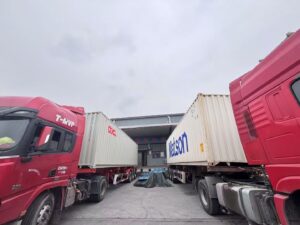
For example, manufacturers in inland Chinese cities may need additional time to secure equipment and arrange trucking to the export port.
Freights Logistics can coordinate container booking, inland transportation, consolidation, and export arrangements to reduce these risks.
7. China Export Shipping Outlook
China remains one of the world’s most important container export origins.
Major export gateways include:
- Qingdao
- Shanghai
- Ningbo
- Shenzhen
- Yantian
- Guangzhou
- Xiamen
- Tianjin
In September, exporters should monitor both vessel availability and equipment availability before finalizing shipping schedules.
For cargo originating from different Chinese factories, consolidation can also help reduce logistics costs.
For example, shipments from multiple suppliers can potentially be consolidated through a China warehouse before being exported as one container.
8. Australia and New Zealand Shipping Market
The China–Australia trade lane is expected to remain comparatively stable in September, although rates can still change depending on vessel availability and seasonal demand.
Common destinations include:
- Sydney
- Melbourne
- Brisbane
- Adelaide
- Fremantle
For Australian importers, September may offer more stable booking conditions than the peak summer months.
However, businesses shipping construction materials, machinery, aluminum products, furniture, or other bulky cargo should still arrange equipment early.
For large-volume cargo, a comparison between FCL, LCL, and direct port-to-door solutions can help control the total logistics cost.
9. Southeast Asia Remains Relatively Competitive
Southeast Asian trade lanes may continue to offer comparatively attractive shipping options.
Key markets include:
- Vietnam
- Thailand
- Malaysia
- Indonesia
- Singapore
- Philippines
Shorter regional routes and strong carrier competition can help maintain relatively competitive freight levels.
However, transshipment requirements can sometimes create additional handling and schedule risks.
For exporters with strict delivery deadlines, a direct service should be compared with a transshipment service based on both price and transit time.
10. Will Ocean Freight Rates Fall in September 2026?
The short answer is: some routes may decline, but a global rate drop is unlikely.
Current market conditions indicate that September will probably be a mixed market.
Possible downward pressure
- Peak-season demand begins to cool
- Asia–Europe volumes moderate
- Additional vessel capacity becomes available
- Retail inventory replenishment slows
- Carrier competition increases
Possible upward pressure
- Strong U.S. import demand
- Blank sailings
- Port congestion
- Fuel price increases
- Geopolitical disruptions
- Panama Canal restrictions
- Emergency surcharges
Therefore, freight rates could move in different directions depending on the destination.
September 2026 Freight Market Forecast
| Trade Lane | September Outlook | Main Factors |
|---|---|---|
| China → U.S. West Coast | Firm | Strong demand, capacity pressure |
| China → U.S. East Coast | Firm to High | Strong demand, longer routing |
| China → Europe | Moderate / Declining | Peak season easing |
| China → Mediterranean | Moderate | Lower demand, routing uncertainty |
| China → Australia | Relatively Stable | Balanced capacity |
| China → Southeast Asia | Stable | Regional capacity and competition |
| China → Middle East | Volatile | Geopolitical and fuel risks |
The actual rate for each shipment will depend on origin, destination, container type, cargo volume, sailing date, and current carrier pricing.
11. How Should Importers Prepare for September 2026?
Businesses can take several steps to reduce freight risks.
Book Earlier for North America
For shipments to the United States, booking 2–3 weeks before cargo readiness is recommended whenever possible.
Stay Flexible on Ports
If your cargo can use multiple ports, comparing alternative gateways may create significant savings.
Compare Multiple Shipping Options
Instead of comparing only the ocean freight rate, evaluate:
- Ocean freight
- Origin charges
- Destination charges
- Customs clearance
- Inland transportation
- Transit time
- Surcharges
The cheapest ocean rate is not always the cheapest overall logistics solution.
Consider Door-to-Door Shipping
For importers without strong local logistics resources, DDP or DDU door-to-door services can simplify the process.
A complete door-to-door solution can include:
Factory Pickup → Export Customs → Ocean Freight → Import Customs → Destination Delivery
This approach can provide better visibility into the total landed cost.
12. What Does September Mean for Q4 Shipping?
September is also an important planning month for Q4.
Businesses preparing for:
- Halloween
- Black Friday
- Cyber Monday
- Christmas
- Year-end projects
- 2027 inventory
should not wait until October or November to arrange transportation.
If demand increases again later in Q4, vessel space and equipment availability could tighten quickly.
For large-volume importers, September is a good time to review:
- Q4 shipping forecasts
- Annual freight contracts
- Alternative ports
- Supplier consolidation
- Warehouse capacity
- Customs requirements
- Inland delivery plans
How Freights Logistics Can Help
Freight markets are becoming increasingly dynamic, and successful international shipping requires more than simply finding a low ocean freight rate.
Freights Logistics provides comprehensive international freight solutions for importers and exporters, including:
- Ocean FCL shipping
- LCL shipping
- China export logistics
- DDP shipping
- DDU shipping
- Door-to-door delivery
- China warehouse services
- Customs clearance
- Cargo consolidation
- Project cargo logistics
- Oversized and special cargo transportation
Our team monitors carrier schedules, available space, routing options, and destination requirements to help customers choose a practical shipping solution.
Whether you are shipping one container or managing regular international cargo, our goal is to provide a balance of cost, reliability, transit time, and supply chain flexibility.
September 2026 Ocean Freight Outlook – FAQ
1. Will ocean freight rates decrease in September 2026?
Some trade lanes, particularly Asia–Europe routes, may continue to experience rate reductions after the summer peak. However, Trans-Pacific rates may remain firm due to strong demand and capacity constraints.
2. Is September a good time to ship from China?
Yes. September may offer more stable conditions on some routes, but exporters should still book early, particularly for U.S.-bound cargo and large-volume shipments.
3. Which China export ports can Freights Logistics support?
Freights Logistics can arrange shipments from major Chinese ports including Qingdao, Shanghai, Ningbo, Shenzhen, Guangzhou, Xiamen, and Tianjin, depending on the cargo and destination.
4. Should I choose FCL or LCL?
FCL is generally suitable for larger cargo volumes or shipments requiring dedicated container space. LCL can be more economical for smaller shipments. The best option depends on cargo volume, dimensions, destination, and delivery requirements.
5. What is the difference between DDP and DDU shipping?
DDP generally includes delivery to the final destination with import duties and taxes handled by the seller or logistics provider, subject to the applicable arrangement. DDU generally excludes import duties and taxes from the seller’s responsibility.
6. How early should I book a September shipment?
For U.S. and other high-demand routes, booking around 2–3 weeks before cargo readiness is a practical target. Larger or project shipments should be planned even earlier.
7. Could geopolitical events cause freight rates to rise again?
Yes. Changes affecting major shipping routes can reduce effective vessel capacity, increase fuel consumption, and create additional surcharges.
8. Will freight rates continue to fall in Q4?
There is no guarantee. If demand weakens and capacity increases, rates could soften. However, geopolitical disruptions, congestion, fuel costs, or renewed peak-season demand could reverse the trend.
Conclusion
The September 2026 ocean freight market is likely to remain highly differentiated by trade lane.
Asia–Europe routes are showing signs of cooling after the summer peak, while Trans-Pacific routes remain comparatively strong. At the same time, geopolitical developments, carrier capacity management, fuel costs, port congestion, and equipment availability could create sudden changes.
For importers and exporters, the best strategy is not simply to wait for the lowest possible rate.
Instead, businesses should focus on early planning, flexible routing, reliable vessel space, accurate cost calculation, and end-to-end logistics coordination.
As the market moves toward Q4, companies that plan their shipments early will be in a better position to control freight costs and avoid last-minute capacity problems.
Need a shipping quote from China? Contact Freights Logistics for ocean freight, DDP, DDU, FCL, LCL, and door-to-door shipping solutions.