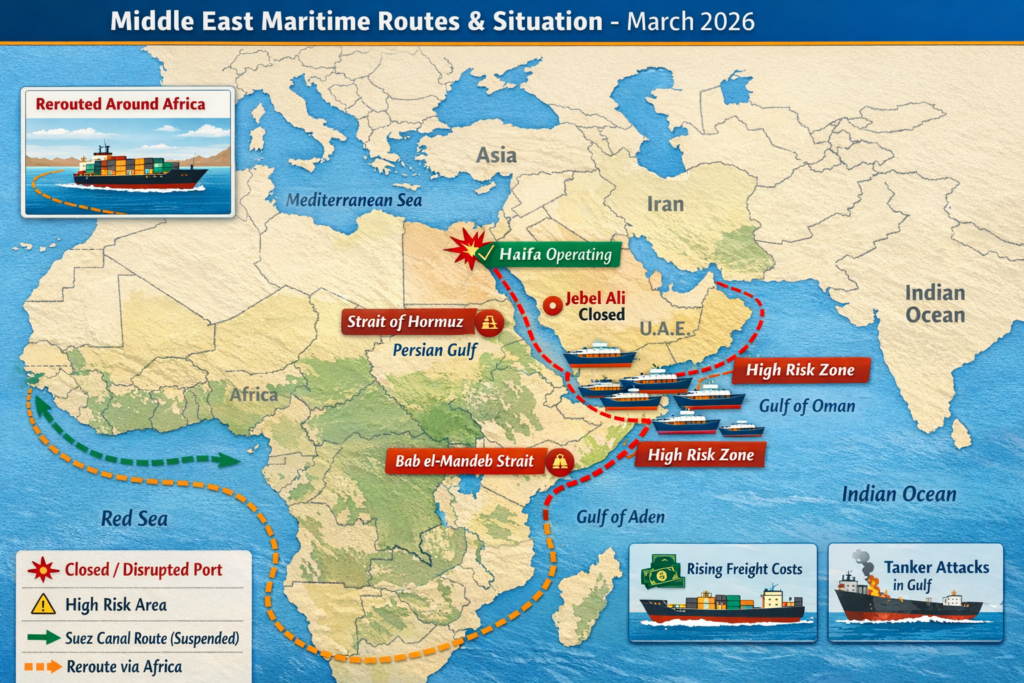
Tensions surrounding the Strait of Hormuz and the Red Sea corridor have intensified in recent days, triggering significant instability across global shipping markets. As geopolitical risks rise, leading ocean carriers are revising sailing schedules, insurance premiums are climbing sharply, and international supply chains are once again under pressure.
For importers and exporters, this situation goes far beyond headlines. It directly affects transit times, freight pricing, bunker adjustment factors, and cargo security. During periods of uncertainty like this, working with a reliable and experienced logistics partner such as FreightsLogistics becomes increasingly important.
Operational Adjustments by Major Carriers
Several major shipping lines have announced immediate contingency measures:
COSCO Shipping Lines
Vessels already inside or heading toward the Persian Gulf will proceed with their scheduled port calls. After completing cargo operations, ships will relocate to designated safe waters to drift or anchor while awaiting further updates.
Hapag-Lloyd
The carrier has suspended all transits through the Strait of Hormuz until further notice, prioritizing crew and cargo safety.
CMA CGM
All vessels currently in the Persian Gulf or en route have been instructed to move to secure areas immediately. The company confirmed rerouting via the Cape of Good Hope, bypassing the Suez Canal.
Maersk
Selected sailings under the ME11 and MECL services have shifted from the Suez route to the Cape of Good Hope alternative.
Currently, many vessels operating in the Persian Gulf are seeking temporary shelter within neutral territorial waters. This large-scale repositioning highlights the seriousness of the security situation.
Oil Markets React Sharply
On March 2, crude oil markets responded immediately to the escalating developments.
-
Brent Crude rose nearly 13% intraday, reaching approximately USD 82 per barrel.
-
According to Goldman Sachs, oil prices now reflect an estimated USD 18 per barrel immediate risk premium.
-
This premium corresponds to market expectations of a potential six-week disruption in the Strait of Hormuz.
Because bunker fuel costs are a core component of ocean freight pricing, continued volatility may directly influence freight surcharges and overall shipping costs.
War Risk Insurance Pressures Escalate
Marine insurance markets are facing intense strain:
-
War risk premiums for commercial vessels have jumped by roughly 50%.
-
For a Very Large Crude Carrier (VLCC) valued at USD 100 million, insurance for a single transit has increased from around USD 250,000 to between USD 375,000 and USD 500,000.
-
Major underwriters such as Lloyd’s of London have issued notices reserving the right to cancel regional coverage within seven days.
-
Some insurers are declining new policies for voyages involving the Persian Gulf altogether.
Should tensions intensify further, vessels may face the serious risk of operating without full insurance coverage.
Impact on Global Supply Chains
The Strait of Hormuz is responsible for roughly 20% of global oil shipments, making it one of the world’s most strategically important waterways. Disruptions here affect:
-
Asia–Europe trade corridors
-
Middle Eastern exports
-
Global energy markets
-
Container equipment availability
-
Worldwide manufacturing output
With carriers diverting around the Cape of Good Hope, Asia–Europe transit times could extend by 10–15 days. This may result in equipment shortages, congestion at alternative ports, rate fluctuations, and increased demurrage or detention charges.
Supply chain resilience is being tested once again.
How FreightsLogistics Supports Your Cargo
In a volatile environment, proactive planning is essential. FreightsLogistics provides comprehensive support to help customers navigate uncertainty:
1. Real-Time Vessel Monitoring
We continuously track route changes, carrier updates, and geopolitical developments to provide timely guidance.
2. Flexible Routing Strategies
If Suez or Hormuz access remains restricted, we assess Cape of Good Hope diversions, multimodal transport options, transshipment solutions, and air freight alternatives for urgent shipments.
3. Cost Risk Forecasting
With fuel prices and insurance premiums fluctuating, we deliver transparent cost projections to help clients manage budgets effectively.
4. Insurance Consultation
We assist clients in reviewing cargo insurance coverage, understanding war risk clauses, and identifying alternative insurance arrangements where necessary.
5. Global Carrier Coordination
Through strong partnerships with major shipping lines, we help secure vessel space even amid capacity tightening.
Strategic Advice for Shippers
Businesses trading across the Middle East, Asia, and Europe should:
-
Verify booking and sailing status promptly
-
Review Incoterms and liability transfer points
-
Confirm adequate cargo insurance coverage
-
Prepare for longer delivery lead times
-
Maintain inventory buffers when possible
-
Stay closely connected with their freight forwarder
Delays in decision-making during unstable periods often lead to higher costs and greater exposure to risk.
Outlook for the Coming Weeks
The next phase will be crucial. If tensions persist, extended rerouting and elevated freight costs may continue into Q2 2026. Alternatively, diplomatic progress could ease market pressures — though volatility is likely to remain.
In challenging times, effective logistics execution makes the difference.
FreightsLogistics is committed to helping you manage complexity, reduce risk, and keep your cargo moving safely across global trade lanes.
If your shipments may be affected by developments in the Strait of Hormuz or the Red Sea, contact FreightsLogistics for customized routing advice and professional logistics support.
Even in uncertain markets, your cargo deserves stability and confidence.