Freights Logistics | Global Shipping Market Update
As the global logistics industry enters April 2026, ocean freight rates continue to demonstrate controlled volatility across major trade lanes. Following the post–Chinese New Year rebound in March, shipping demand has gradually stabilized, but pricing remains dynamic due to capacity adjustments, geopolitical risks, and shifting global trade flows.
At Freights Logistics, we provide real-time freight insights and customized logistics solutions to help importers, exporters, and supply chain managers navigate market uncertainty with confidence.
Global Ocean Freight Market Overview
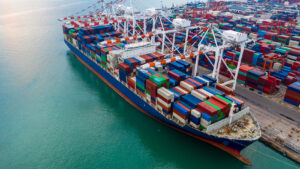
In April 2026, the container shipping market is characterized by a delicate balance between supply and demand.
Key Influencing Factors:
Gradual recovery of export demand across Asia
Continued vessel overcapacity due to new ship deliveries
Ongoing geopolitical risks impacting key shipping routes
Carrier-controlled capacity through blank sailings and slow steaming
Rather than sharp increases or declines, freight rates are moving within a fluctuating but manageable range, requiring businesses to stay agile.
China Export Freight Trends (April 2026)
China → United States
The Transpacific trade lane continues its moderate upward trend, supported by steady demand and improved cargo flow.
Market Drivers:
Retail restocking in the US
Stable consumer demand
Reduced blank sailings after Q1
Reference Rates:
Shanghai → Los Angeles: $1,900 – $2,200 / FEU
Shanghai → New York: $2,700 – $3,100 / FEU
Freights Logistics Insight:
April is an ideal time to secure competitive rates before peak season surcharges (PSS) begin in Q3.
China → Southeast Asia
Intra-Asia shipping remains highly efficient and cost-effective, with stable pricing supported by strong regional trade.
Market Highlights:
High vessel frequency
Fast transit times
Growing ASEAN trade demand
Reference Rates:
China → Vietnam / Thailand: $50 – $150 / TEU
China → Indonesia / Philippines: $100 – $300 / TEU
Freights Logistics Solutions:
LCL consolidation services
Cross-border trucking + sea freight integration
Fast customs clearance across Southeast Asia
China → Australia
The China–Australia route is stable with slight upward pressure, driven by infrastructure and construction demand.
Reference Rates:
Shanghai → Sydney / Melbourne: $900 – $1,400 / 40HQ
Freights Logistics Expertise:
We support:
DDU/DDP door-to-door solutions
Bulk cargo and project shipments
Building materials and machinery transport
China → Europe
Asia–Europe freight rates remain relatively soft but showing signs of stabilization.
Market Conditions:
Slower consumer demand in Europe
Increased shipping capacity
Alternative routing due to geopolitical risks
Reference Rates:
Shanghai → Rotterdam: $1,300 – $1,800 / TEU
Shanghai → Mediterranean: $2,000 – $2,500 / TEU
Freights Logistics Recommendation:
Flexible shipping strategies such as:
Sea + rail multimodal transport
Early booking to avoid sudden GRIs
China → Canada
Freight rates to Canada are stable with slight increases, closely aligned with US market trends.
Reference Rates:
Shanghai → Vancouver: $2,000 – $2,400 / FEU
Shanghai → Toronto (rail combined): $3,000 – $3,600 / FEU
Freights Logistics Advantage:
Integrated sea-rail logistics solutions
Efficient customs clearance support
End-to-end delivery services
Southeast Asia Export Trends
Southeast Asia continues to rise as a global manufacturing hub, strengthening its export position worldwide.
Key Export Markets:
United States
Europe
Middle East
Africa
Market Trends:
Stable export growth
Competitive freight rates
Diversification away from single-origin sourcing
Reference Rates:
Vietnam → US West Coast: $1,800 – $2,300 / FEU
Thailand → Europe: $1,400 – $2,000 / TEU
Malaysia → Middle East: $1,200 – $1,800 / TEU
Freights Logistics Strength:
Multi-country cargo consolidation
Flexible origin management
DDP/DDU global shipping solutions
Key Risks Impacting Freight Rates
Geopolitical Uncertainty
Ongoing tensions in key regions continue to affect global shipping routes, potentially causing:
Route diversions
Increased transit times
Emergency surcharges
Vessel Oversupply
With new container ships entering service in 2026:
Long-term rate pressure remains
Carriers increase competition and adjust capacity
Fuel and Environmental Costs
New environmental regulations are gradually increasing:
Fuel-related surcharges (BAF)
Sustainability-related logistics costs
Freights Logistics Strategic Recommendations
To stay competitive in April 2026, we advise:
1. Combine Contract + Spot Rates
Balance stability and flexibility in your shipping strategy
2. Plan Ahead for Peak Season
Secure space early before Q3 demand surge
3. Diversify Routes and Ports
Reduce risks caused by congestion or geopolitical disruption
4. Work With Professional Freight Forwarders
Freights Logistics provides:
Real-time market intelligence
Cost optimization strategies
Reliable global shipping networks
Market Outlook for 2026
The rest of 2026 is expected to show:
Continued controlled volatility
Moderate rate increases approaching peak season
Strong influence from geopolitical and economic factors
While extreme price spikes are unlikely, short-term fluctuations will remain common.
April 2026 highlights a more stable yet still dynamic global freight market. Businesses must remain flexible and informed to manage costs effectively.
With the right logistics partner, companies can turn market uncertainty into opportunity.
Freights Logistics is committed to delivering:
Competitive freight rates
Flexible shipping solutions
Reliable global logistics support
FAQ – Ocean Freight Trends & Shipping Solutions (2026)
1. Why are ocean freight rates still fluctuating in 2026?
Freight rates are influenced by multiple factors including vessel oversupply, geopolitical tensions, fuel costs, and changing global demand. These elements create a dynamic pricing environment rather than a fixed trend.
2. Will freight rates increase in the second half of 2026?
Rates are expected to rise moderately during peak shipping season (Q3–Q4), especially on major routes such as China to the US and Europe.
3. What is the best time to book shipments?
April to June is generally a good window to secure stable rates before peak season surcharges are implemented.
4. Should I choose spot rates or long-term contracts?
A hybrid strategy is recommended:
Long-term contracts for stability
Spot rates to take advantage of market opportunities
5. How can I reduce international shipping costs?
You can reduce costs by:
Optimizing packaging to save space
Consolidating shipments (LCL)
Planning shipments in advance
Working with experienced freight forwarders like Freights Logistics
6. What services does Freights Logistics provide?
Freights Logistics offers:
Ocean freight (FCL & LCL)
Air freight solutions
DDP/DDU door-to-door shipping
Customs clearance
Warehousing and distribution
7. How do geopolitical events affect shipping?
Geopolitical risks can lead to:
Route changes
Increased transit time
Additional surcharges
Capacity shortages