In the rapidly evolving world of global trade and ocean freight, container ports play a critical role in keeping supply chains moving. These mega-ports act as gateways between manufacturing centers and consumer markets, shaping shipping routes, transit times, and freight costs worldwide.
As we move into 2026, shifts in trade patterns, port automation, and supply chain diversification continue to redefine global logistics. Based on the latest industry data and port authority reports, Freights Logistics presents the Top 10 Largest Container Ports in the World (2026 Update)—and explains why they matter for shippers, freight forwarders, and supply chain managers.
🌍 Top 10 Largest Container Ports in the World (2026)
| Rank | Port | Country / Region | Estimated Throughput | Key Role |
|---|---|---|---|---|
| 1 | Port of Shanghai | China | ~52 million TEUs | Global export gateway |
| 2 | Port of Singapore | Singapore | ~42 million TEUs | World’s leading transshipment hub |
| 3 | Ningbo-Zhoushan Port | China | ~40 million TEUs | Manufacturing & export powerhouse |
| 4 | Port of Shenzhen | China | ~33 million TEUs | Southern China export hub |
| 5 | Port of Qingdao | China | ~28 million TEUs | Northern China logistics gateway |
| 6 | Port of Guangzhou | China | ~27 million TEUs | Pearl River Delta trade hub |
| 7 | Port of Busan | South Korea | ~24 million TEUs | Northeast Asia transshipment center |
| 8 | Port of Tianjin | China | ~22 million TEUs | Gateway to Beijing & North China |
| 9 | Jebel Ali Port | UAE | ~15 million TEUs | Middle East’s largest container port |
| 10 | Port Klang | Malaysia | ~14 million TEUs | Fast-growing Southeast Asia hub |
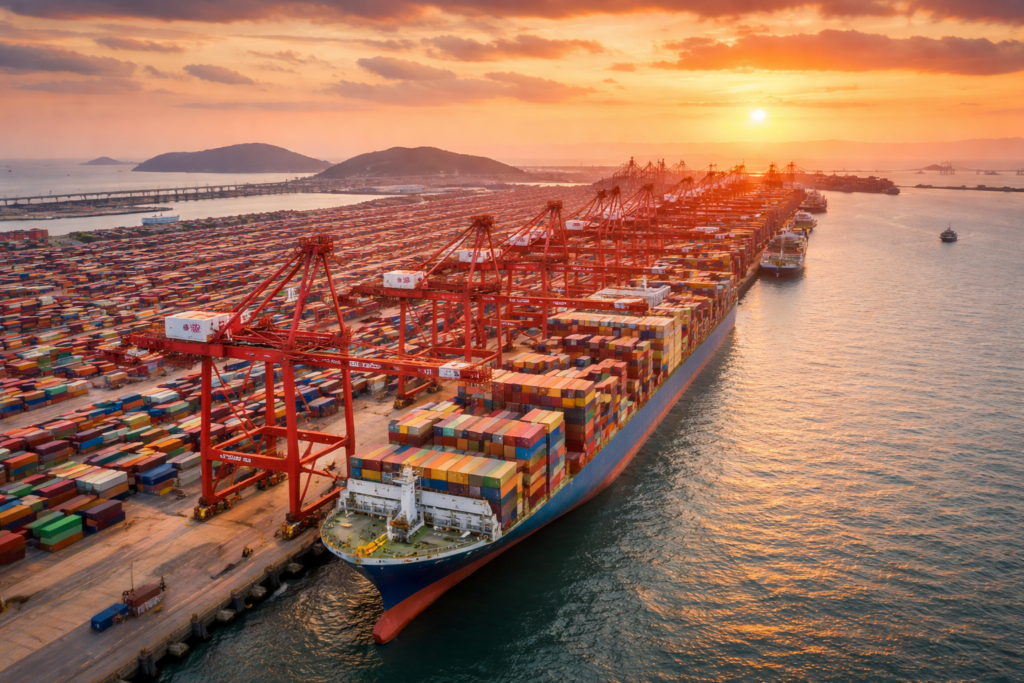
1. Port of Shanghai, China
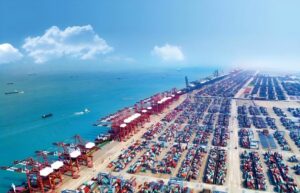
The Port of Shanghai remains the world’s largest container port, a position it has held for over a decade. Located at the mouth of the Yangtze River, it serves China’s most industrialized regions and connects to more than 500 ports globally.
With advanced automation at the Yangshan Deep-Water Port and the ability to handle ultra-large container vessels (ULCVs), Shanghai offers unmatched capacity and efficiency. For exporters shipping to Europe, North America, or Australia, Shanghai continues to be a cornerstone of global ocean freight.
2. Port of Singapore, Singapore
The Port of Singapore is the undisputed leader in transshipment logistics. Handling a significant share of global container transfers, it links Asia with Europe, the Middle East, Africa, and Oceania.
The ongoing development of Tuas Mega Port will further strengthen Singapore’s position, eventually raising capacity to over 60 million TEUs. Its reliability, deep-water access, and fast turnaround times make it a preferred hub for major global carriers.
3. Ningbo-Zhoushan Port, China
Located south of Shanghai, Ningbo-Zhoushan Port has rapidly risen to become one of the world’s busiest container ports. It supports a vast manufacturing base in Zhejiang Province and offers strong sea-rail intermodal connections.
For shippers looking to avoid congestion at Shanghai while maintaining high service levels, Ningbo provides a highly efficient alternative with competitive inland transport costs.
4. Port of Shenzhen, China
The Port of Shenzhen, including Yantian, Shekou, and Chiwan terminals, is a vital export hub for southern China. It plays a major role in shipping electronics, consumer goods, and high-value cargo.
Its proximity to the Pearl River Delta and Hong Kong enables dense sailing schedules and flexible routing options, especially for Asia-Pacific and Australia-bound cargo.
5. Port of Qingdao, China
As a key northern Chinese port, Qingdao handles both containerized cargo and bulk commodities such as iron ore and energy products. Its fully automated container terminal is among the most efficient in Asia.
Qingdao offers direct services to major global markets and is an important gateway for exporters in northern China seeking stable and scalable ocean freight solutions.
6. Port of Guangzhou, China
The Port of Guangzhou serves the core of the Pearl River Delta economic zone. With expanding container terminals and improving rail connectivity, Guangzhou is strengthening its role as a multimodal logistics hub.
It complements nearby Shenzhen by providing additional capacity and routing flexibility for exporters in southern China.
7. Port of Busan, South Korea
Busan Port remains Northeast Asia’s most important transshipment center outside China. Its strategic location, deep-water berths, and efficient operations make it a key stop on Asia-Europe and Asia-Oceania routes.
Many international shipments are transshipped through Busan to optimize transit time and network coverage.
8. Port of Tianjin, China
Serving as the maritime gateway to Beijing and northern China, Tianjin Port plays a vital role in container, bulk, and roll-on/roll-off cargo handling.
Its strong rail connections support inland distribution and international sea-rail corridors, aligning closely with China’s Belt and Road Initiative.
9. Jebel Ali Port, UAE
Operated by DP World, Jebel Ali Port is the largest container port in the Middle East. Its strategic location between Asia, Europe, and Africa makes it a crucial transshipment hub.
Jebel Ali is especially important for cargo moving between Asia and emerging markets in the Middle East and Africa.
10. Port Klang, Malaysia
Port Klang has emerged as one of Southeast Asia’s fastest-growing container ports. Located near Kuala Lumpur, it benefits from strong regional manufacturing and re-export activity.
Ongoing expansion projects are expected to further increase capacity and enhance its role in global shipping networks.
📈 Global Container Port Trends in 2026
Several key trends are shaping port operations worldwide:
- Asia’s continued dominance in global container throughput
- Port automation and digitalization to improve efficiency and reduce delays
- Green port initiatives, including shore power and cleaner fuels
- Supply chain diversification, driving growth in alternative regional hubs
🚢 Why This Matters for Shippers
For cargo owners and logistics managers, understanding port capabilities is essential for:
- Reducing congestion risks
- Optimizing transit times and freight costs
- Selecting reliable gateways for international trade
- Building resilient, flexible supply chains
At Freights Logistics, we help our clients navigate these global port networks with data-driven routing strategies and end-to-end freight solutions.
🔑 Final Thoughts
As global trade continues to adapt in 2026, the world’s largest container ports remain the backbone of international logistics. Staying informed about port rankings, capacity, and trends enables smarter shipping decisions and stronger supply chain performance.
Freights Logistics is committed to providing reliable insights and customized logistics solutions to support your global shipping needs.
📩 Contact our team today to optimize your ocean freight strategy.