In today’s highly competitive and fast-paced global economy, manufacturing companies are under constant pressure to reduce costs, improve efficiency, and meet rising customer expectations. One critical factor that directly impacts all of these goals is manufacturing logistics.
Manufacturing logistics is more than just moving goods from point A to point B. It is a complex system that connects raw material suppliers, production facilities, warehouses, and final customers into a coordinated and efficient supply chain. Understanding how manufacturing logistics works—and how to manage its challenges—is essential for long-term operational success.
What Is Manufacturing Logistics?
Manufacturing logistics refers to all processes involved in the creation, storage, and movement of goods throughout the manufacturing lifecycle.
This includes:
- Transporting raw materials to production lines
- Managing inventory levels and storage locations
- Planning production-related logistics operations
- Delivering finished products to distribution centers, retailers, or end customers
The ultimate goal of manufacturing logistics is to ensure the right materials arrive at the right place, at the right time, and at the right cost, while maintaining consistent production flow and high customer satisfaction.
When executed effectively, manufacturing logistics reduces delays, minimizes waste, improves visibility, and strengthens overall supply chain performance.
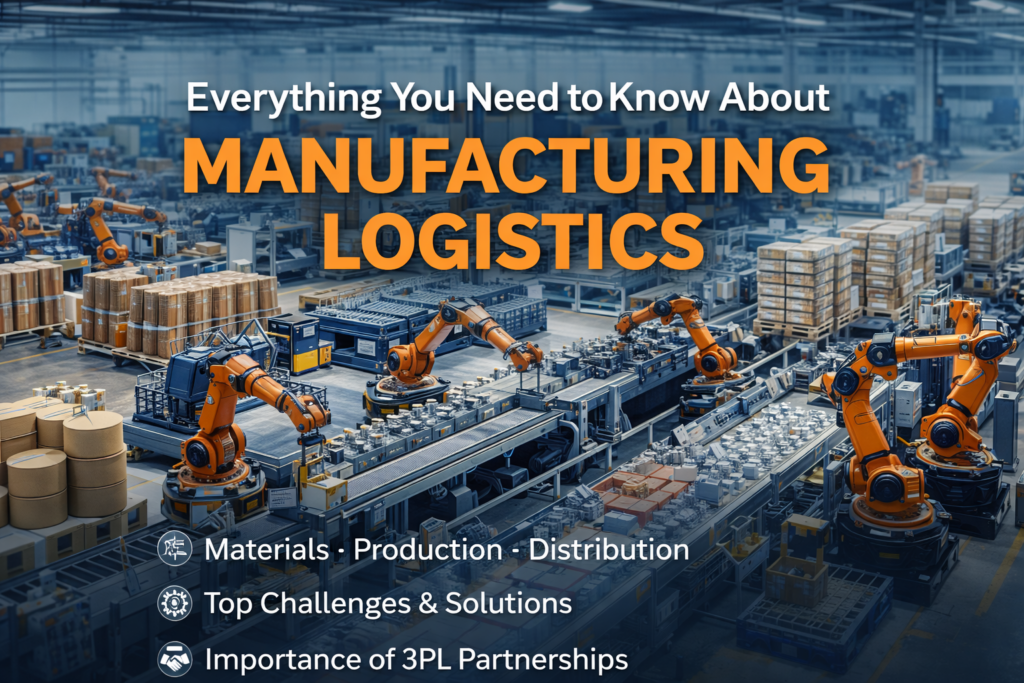
The Three Core Areas of Manufacturing Logistics
Manufacturing logistics can be divided into three interconnected phases, each playing a vital role in ensuring smooth operations.
1. Materials Logistics
Materials logistics covers all activities that take place before raw materials reach the production line.
Key components include:
- Procurement and supplier coordination
- Inbound transportation management
- Receiving, handling, and storage of raw materials and components
Efficient materials logistics ensures that production lines are never interrupted due to material shortages. Poor planning in this phase can result in costly downtime, excess inventory, or delayed manufacturing schedules.
Companies that invest in supplier coordination, demand forecasting, and inbound logistics optimization can significantly improve production reliability.
2. Production Logistics
Production logistics focuses on the movement, handling, and storage of goods during and immediately after manufacturing.
This phase includes:
- Internal material flow within the factory
- Storage of semi-finished and finished goods
- Coordination between production stages
The primary objective of production logistics is to maintain a smooth, uninterrupted workflow. Bottlenecks, inefficient layouts, or poor coordination between departments can slow down production and increase operational costs.
Optimized production logistics supports lean manufacturing principles by reducing unnecessary handling, shortening cycle times, and improving overall efficiency on the factory floor.
3. Distribution Logistics
Distribution logistics manages the movement of finished products from manufacturing facilities to customers or markets.
This phase involves:
- Order processing and fulfillment
- Packaging and shipment preparation
- Transportation planning and carrier selection
- Final delivery to distribution centers or end users
Distribution logistics directly affects customer satisfaction. Delays, shipment errors, or lack of visibility can damage brand reputation and lead to lost business.
Strong distribution logistics ensures on-time delivery, accurate order fulfillment, and cost-effective transportation.
Measuring Performance in Manufacturing Logistics
Each phase of manufacturing logistics relies on specific performance metrics and key performance indicators (KPIs) to evaluate efficiency and identify areas for improvement.
Common KPIs include:
- Transportation cost per unit
- Inventory turnover rate
- Order accuracy
- On-time delivery performance
- Warehouse utilization
By monitoring these metrics, companies gain better control over logistics operations and can make data-driven decisions to optimize their supply chains.
Top Challenges in Manufacturing Logistics — And How to Solve Them
Despite its importance, manufacturing logistics presents several ongoing challenges. Below are three of the most common issues and practical strategies to address them.
1. Rising Transportation Costs
Transportation is often one of the largest expenses in manufacturing logistics. Fuel price fluctuations, global supply chain disruptions, labor shortages, and weather-related delays all contribute to increasing costs.
How to manage transportation costs:
- Improve shipment visibility through real-time tracking systems
- Optimize routing and mode selection
- Consolidate shipments where possible
- Partner with a professional Third-Party Logistics provider (3PL)
Working with a 3PL allows manufacturers to leverage established carrier networks, advanced technology, and negotiated freight rates. Outsourcing transportation can also reduce internal payroll, fleet maintenance, and insurance expenses.
2. Regulations and Compliance
Manufacturing logistics often involves shipping goods across multiple regions or international borders, each with its own regulations and customs requirements.
Challenges include:
- Complex documentation
- Customs clearance delays
- Risk of fines or penalties due to non-compliance
How to address compliance challenges:
- Maintain dedicated compliance expertise in-house
- Partner with a 3PL that understands local and international regulations
An experienced logistics partner can help ensure accurate documentation, regulatory compliance, and smooth customs clearance, reducing risk and preventing costly delays.
3. Inventory Management Challenges
Fluctuating customer demand, changing production schedules, and raw material shortages make inventory management one of the most complex aspects of manufacturing logistics.
Poor inventory planning can result in:
- Stockouts that halt production
- Excess inventory that ties up capital
- Increased storage and handling costs
How to improve inventory management:
- Implement demand forecasting and inventory planning tools
- Use strategically located warehouses
- Leverage inventory management systems with real-time visibility
A 3PL can provide warehousing solutions, inventory tracking systems, and data-driven insights that help manufacturers maintain optimal stock levels and respond quickly to market changes.
The Value of Partnering with a 3PL in Manufacturing Logistics
Manufacturing logistics requires coordination across multiple functions, locations, and stakeholders. For many companies, partnering with a knowledgeable 3PL logistics provider offers a practical and scalable solution.
A strong 3PL partnership can help:
- Reduce logistics costs
- Improve supply chain visibility
- Enhance operational flexibility
- Allow manufacturers to focus on core production activities
By outsourcing complex logistics operations, manufacturers can dedicate more resources to innovation, quality, and growth.
Conclusion
Manufacturing logistics is a critical pillar of modern supply chain management. From sourcing raw materials to delivering finished products, every stage must work seamlessly to ensure efficiency, reliability, and customer satisfaction.
While challenges such as rising transportation costs, regulatory complexity, and inventory management persist, they can be effectively managed through strategic planning, technology, and experienced logistics partnerships.
Ultimately, companies that invest in strong manufacturing logistics capabilities gain long-term competitive advantages—streamlined operations, reduced risk, and the ability to meet customer demands in an increasingly dynamic global market.