Many importers spend a significant amount of time negotiating product prices with suppliers in order to reduce purchasing costs. However, the savings achieved during negotiations can quickly disappear during the final stage of the supply chain—shipping. In international logistics, improper packaging is one of the most common causes of cargo damage, unexpected expenses, and customs issues.
Consider a typical ocean freight journey: cargo may travel thousands of miles across the sea, exposed to high humidity, salty air, changing temperatures, and constant vessel movement. If high-quality products are packed in weak or unsuitable cartons, they may arrive at the destination crushed, damp, or completely unsellable.
At Freights Logistics, we believe packaging is not only about protecting cargo but also about optimizing the entire shipping process. Proper packaging helps prevent cargo damage, ensures compliance with international regulations, and can significantly reduce transportation costs.
Below are several important reasons why proper packaging is essential for successful ocean freight shipments.
1. Physical Protection: Ocean Shipping Is a Harsh Environment
Ocean freight shipments are exposed to conditions that can be far more demanding than many importers expect. Containers are typically stacked several layers high on cargo vessels, and the cargo at the bottom must support substantial weight during transit.
In addition to stacking pressure, vessels experience continuous motion due to waves and weather conditions. This movement can place additional stress on packaging materials.
Common Packaging Problems in Ocean Freight
Cargo Crushing During Stacking
Some suppliers attempt to reduce costs by using single-wall corrugated cartons. While these cartons may appear sufficient during factory packing, they often cannot withstand the pressure of container stacking and may collapse during transportation, damaging the products inside.
Container Condensation (“Container Rain”)
During long ocean voyages, temperature fluctuations between day and night can cause condensation to form inside the container. This phenomenon, commonly known as “container rain,” results in moisture accumulating on the container ceiling and dripping onto the cargo. Without proper protective measures such as plastic wrapping or moisture-absorbing desiccants, cartons can absorb water and weaken.
How Freights Logistics Helps Protect Your Cargo
At Freights Logistics, we serve as a final quality control checkpoint before shipments leave the port. Instead of simply loading cargo as received, we evaluate the packaging condition to ensure it is suitable for international transportation.
If the packaging is weak or unsuitable, we provide professional cargo handling solutions such as:
-
Replacing or reinforcing damaged cartons
-
Repacking goods with stronger packaging materials
-
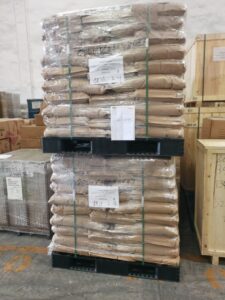
Palletizing loose cartons for better stability
-
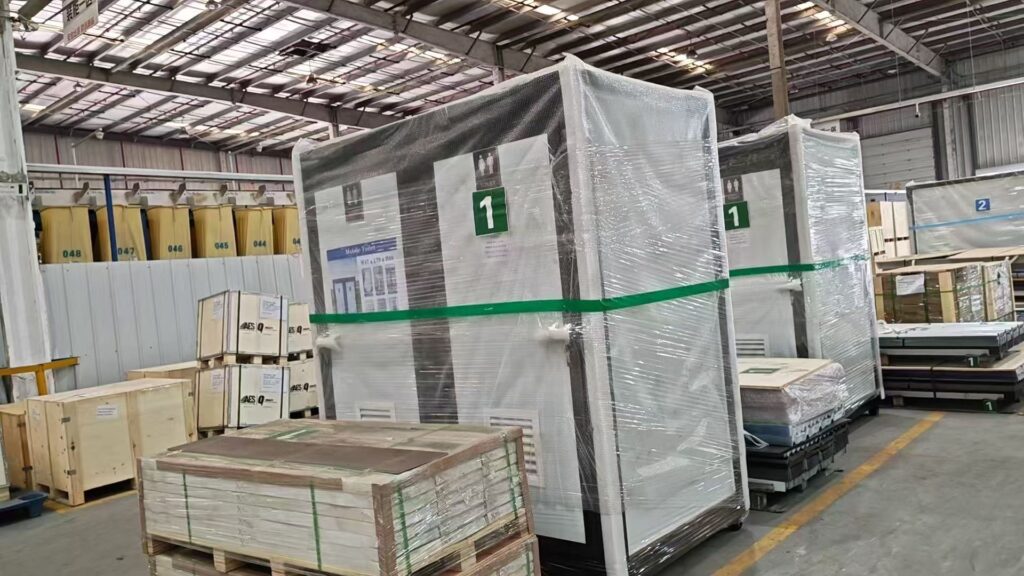
Shrink-wrapping cargo to improve waterproof protection and load stability
Through these measures, we help ensure that goods arrive at their destination in the same condition they left the factory.
2. Cost Efficiency: Avoid Paying for Empty Space
Packaging does not only affect cargo safety—it also plays an important role in determining shipping costs.
In international logistics, freight charges are typically calculated using two measurements:
Actual Weight – the physical weight of the cargo measured on a scale.
Volumetric (Dimensional) Weight – the amount of space the cargo occupies, calculated based on its volume.
Carriers and freight forwarders will charge based on whichever value is higher.
A Common and Costly Mistake
Some suppliers pack small items in oversized cartons with excessive empty space. While this may simplify packing at the factory, it significantly increases the shipment’s volume in cubic meters (CBM).
As a result, importers may end up paying freight charges for unused space.
How Freights Logistics Helps Optimize Packaging
At Freights Logistics, we review packaging efficiency and provide recommendations to reduce wasted space. By optimizing carton dimensions and packing density, companies can often:
-
Increase the number of units per container
-
Reduce LCL (Less-than-Container Load) shipping volume
-
Lower the freight cost per product unit
Efficient packaging can significantly reduce overall logistics expenses, especially for high-volume shipments.
3. Compliance: Understanding the ISPM 15 Wood Packaging Regulation
For shipments requiring wooden pallets or crates, importers must comply with international phytosanitary regulations.
Many countries—including the United States, Canada, Australia, and members of the European Union—strictly enforce the ISPM 15 (International Standards for Phytosanitary Measures No. 15) regulation. This rule is designed to prevent harmful pests from spreading through untreated wood packaging materials.
Key Requirements of ISPM 15
According to the ISPM 15 regulation:
-
All solid wood packaging materials must be heat-treated or fumigated
-
Treated wood must display the official IPPC certification stamp
Risks of Non-Compliance
If wooden packaging materials do not meet ISPM 15 requirements, customs authorities may take several actions, including:
-
Rejecting the shipment
-
Requiring costly re-treatment procedures
-
Ordering the cargo to be returned to the origin country
These outcomes can cause significant delays and financial losses.
Compliance Services from Freights Logistics
Freights Logistics assists customers with wood packaging compliance by providing:
-
Certified fumigation and heat-treatment services
-
Proper IPPC marking and documentation
-
Verification of pallet and crate compliance prior to export
By ensuring shipments meet international regulations, we help customers avoid customs delays and maintain smooth shipping operations.
4. Palletized Cargo vs. Floor Loading
Another common question from importers is whether cargo should be palletized or loaded directly into containers as loose cartons.
Both methods have advantages depending on the type of goods being shipped.
Floor Loading (Loose Cartons)
Advantages
-
Maximizes container space utilization
-
Allows more cartons to fit into a single container
Disadvantages
-
Slower unloading process at the destination
-
Higher labor costs for manual handling
-
Increased risk of carton damage
Palletized Cargo
Advantages
-
Improved cargo protection and stability
-
Faster loading and unloading using forklifts
-
Reduced risk of cargo shifting during transit
Disadvantages
-
Slightly less container capacity due to pallet dimensions
Professional Recommendation
For fragile or high-value goods, palletization is generally the safest option.
For durable products such as garments or textiles, floor loading may be acceptable when maximizing container capacity is the priority.
At Freights Logistics, we help clients evaluate both options and determine the most cost-efficient loading strategy based on cargo type and shipping requirements.
Conclusion
Proper packaging plays a crucial role in the success of ocean freight shipments. High-quality packaging protects cargo from moisture, pressure, and handling damage while also helping businesses optimize container space and comply with international regulations.
In global logistics, investing in proper packaging is far more cost-effective than dealing with damaged goods or shipping inefficiencies.
At Freights Logistics, we provide professional cargo inspection, packaging optimization, and compliance services before shipments depart from China. Our goal is to ensure every shipment is prepared for the demanding conditions of international ocean transportation.
Need Professional Packaging Support for Your Shipment?
Freights Logistics helps businesses inspect, protect, and optimize cargo before export.
Contact our team today to discuss your upcoming ocean freight shipment and ensure your goods are packed for safe, efficient delivery worldwide.